

There is a familiar pattern that plays out in organisations across the UK. A leadership team, genuinely committed to building a more inclusive culture, commissions a strategy. Consultants produce a polished document. The document gets presented. And then, slowly but surely, it gathers dust. Engagement drops. Employees grow sceptical. The initiative loses momentum, and leaders are left wondering what went wrong.
The answer, almost always, is the same: the strategy was imposed rather than built with the people it was meant to serve.
This is one of the most costly mistakes organisations make on their inclusion journeys, and it is entirely avoidable.
The Problem With Top-Down Inclusion
When inclusion strategies are designed behind closed doors and handed down through the organisation, they carry an invisible flaw from the very beginning. They reflect the assumptions of the people who created them, not the lived realities of the people they are supposed to support.
C-Suite leaders often recognise this tension. You want to do the right thing, but you may not have personal experience of underrepresentation. You are trying to balance the needs of a genuinely diverse workforce without inadvertently alienating groups or creating a sense of hierarchy around whose experiences matter most. These are real, valid challenges, and they are precisely why the process of building an inclusion strategy matters just as much as the content of it.
A strategy that employees feel has been done to them will always struggle. A strategy that people feel they have shaped will generate the kind of ownership, trust, and sustained engagement that actually moves the dial.
What Co-Creation Really Means
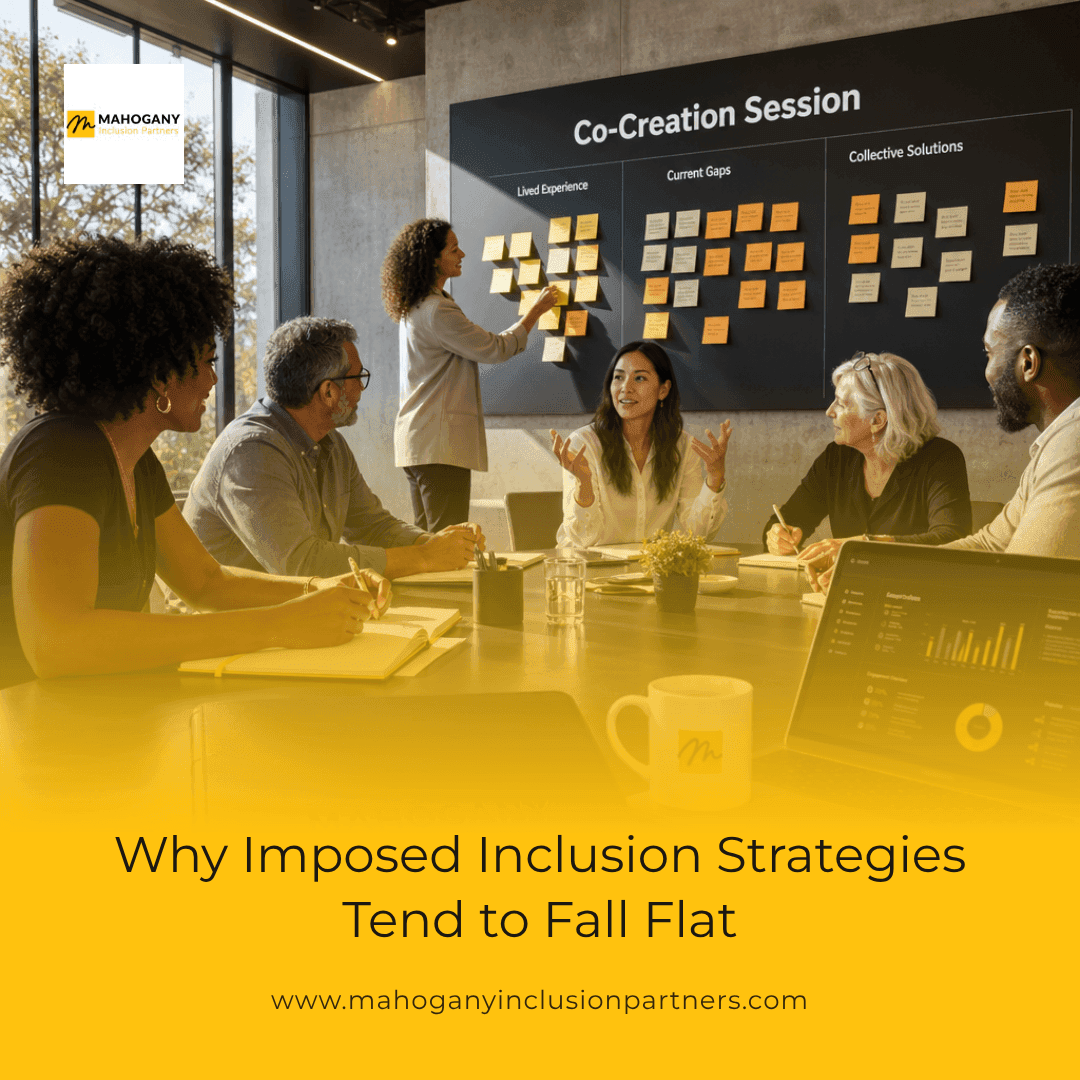
Co-creation is not simply running a survey or holding a town hall and then proceeding as planned. Genuine co-creation means bringing diverse voices into the actual design process, at multiple stages, with genuine influence over the outcomes.
In practice, this looks like structured listening exercises that go beyond surface-level feedback. It means creating psychologically safe spaces where employees at every level feel genuinely able to share their experiences, including the uncomfortable ones, without fear of consequence. It means ensuring that the data gathered is not just collected but actively shapes the strategy's priorities.
It also means being transparent about what is possible and what is not. When employees understand the context, the constraints, and the reasoning behind decisions, trust builds. When they feel consulted but ultimately ignored, it does the opposite.
The organisations we have worked with that achieve the most meaningful, lasting cultural change are those whose leaders are willing to sit with uncertainty, listen without defensiveness, and allow their assumptions to be genuinely challenged. That takes courage. It also takes structure.
Co-Creation and Psychological Safety Are Inseparable
You cannot co-create an inclusion strategy in an environment where people do not feel safe to speak honestly. The two are deeply connected.
If employees from underrepresented groups have learned, through experience, that raising concerns leads to being labelled as difficult, or that their input is welcomed in theory but ignored in practice, they will not participate meaningfully in co-creation exercises. You will get polite, cautious responses that tell you very little about what is actually happening in your organisation.
Building psychological safety is therefore a prerequisite, not a by-product. This is something leadership teams need to invest in before they expect honest co-creation to happen. It requires deliberate work around how leaders show up, how feedback is received, and how visible the consequences (or lack thereof) are when people speak up.
When that foundation is in place, co-creation becomes genuinely possible. And when it becomes possible, the quality of the insight you gather is transformative.
The Role of Data in Co-Created Strategies
Co-creation should not mean abandoning rigour. Qualitative input from employees is invaluable, but it needs to sit alongside robust data to give you the full picture.
Inclusion audits and assessments play a critical role here. They surface patterns that individual conversations might miss, highlight where systemic barriers exist, and provide a measurable baseline against which progress can be tracked. When employees see that their qualitative input is being triangulated with data and used to set concrete, measurable objectives, it reinforces that co-creation is genuine rather than performative.
This combination of human insight and hard data is what separates strategies that produce real outcomes from those that produce impressive slide decks.
Why Leaders Must Be Part of the Process Too
Co-creation is not only about engaging frontline employees. Senior leadership teams themselves need to be part of an honest, structured process of reflection and learning.
Leading an inclusive culture credibly, particularly when you have not personally experienced the barriers others face, requires more than good intentions. It requires the tools, knowledge, and coached self-awareness to show up in ways that build rather than erode trust. It requires understanding how your behaviours as a leader either open or close the space for honest dialogue.
When we work with boards and top teams, one of the most consistent themes we encounter is that leaders genuinely want to do this well. They are not resistant; they are often uncertain. Giving them the right frameworks and a safe space to learn, question, and grow is what enables them to lead inclusion efforts with authenticity and confidence.
Building Something That Lasts
The organisations that sustain inclusive cultures over time are not those that implemented the most sophisticated strategies on paper. They are the ones that built genuine buy-in at every level, that made inclusion feel like a shared endeavour rather than a corporate mandate.
That kind of culture does not emerge from a document. It emerges from the relationships, conversations, and shared experiences that happen when people feel they are genuinely part of shaping something meaningful together.
If your organisation is ready to move beyond well-intentioned initiatives and build an inclusion strategy that genuinely sticks, we would love to be part of that process. Visit Mahogany Inclusion Partners to learn how our co-created, data-driven approach helps leadership teams build high-performing, inclusive cultures with measurable results.